

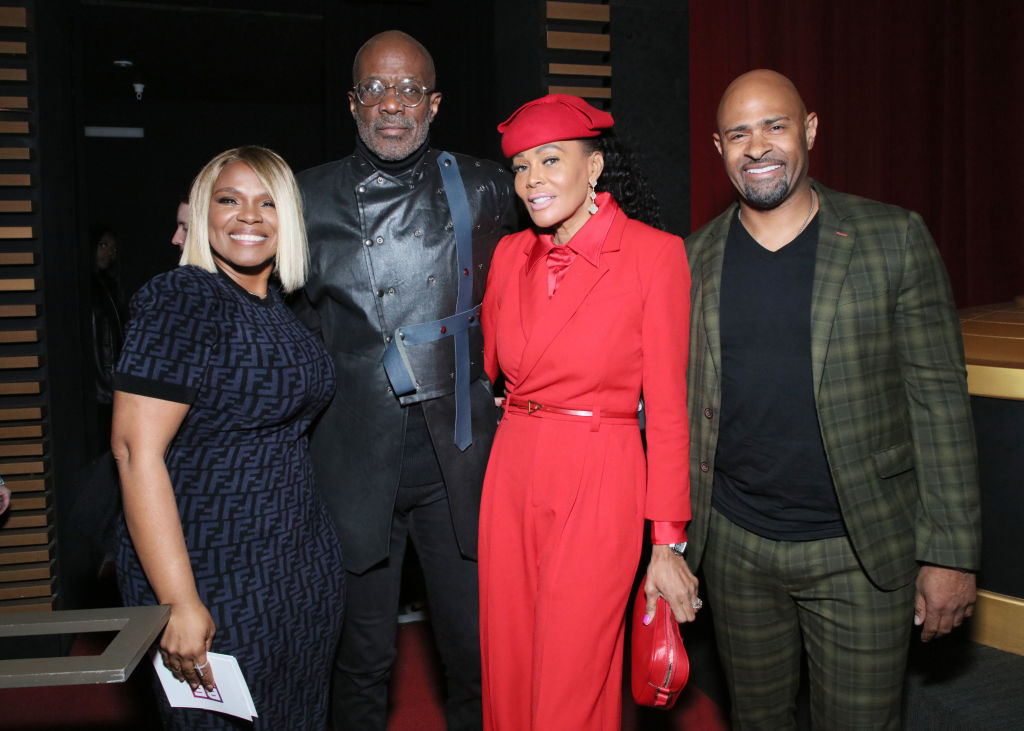





















Two groups of black media figures are looking into buying Ebony (above) and Jet magazines from Johnson Publishing Company.
At least two separate black groups have stepped up to say they want to run the iconic
Ebony and
Jet magazines, whose owners are reported to be shopping for a buyer.
A group of journalists including former National Association of Black Journalists President Sidmel Estes-Sumpter, media executive and college professor Neil Foote and former broadcast news manager Willie Chriesman confirmed interest in the publications in interviews with BlackAmericaweb.com.
Another group, headed by Connecticut businessmen and brothers Kenton and Peter Clarke also said they want to acquire the magazines that have chronicled black life and culture for decades.
“We’ve been talking about this for about a year. We’ve tried to create a journalist’s model for the publications with multiple platforms,” Estes-Sumpter told BlackAmericaWeb.com. “We’ve been pitching it to venture capitalists.”
Kenton Clarke, CEO of DiversityBusiness, said
Ebony and
Jet are strong brands that have greater potential for growth if changes are made to adjust to changes in demographic groups and markets.
Clarke, whose Connecticut-based corporation includes media and information technology divisions, said his company has the technology to enhance and expand
Ebony’s current readership and capture new advertisers.
Newsweek magazine recently published an article saying that
Ebony magazine was facing hard times and Johnson Publishing Company Inc. was looking to sell.
The
Newsweek article, published Sept. 25, reported that, “According to media and investment executives familiar with the developments, Chicago-based (Linda Johnson) Rice, the daughter of
Ebony's legendary founder, the late John H. Johnson, has approached, among others, Time Inc., Viacom, and private investors that include buyout firms. Time Inc., the world's largest periodical publisher, already owns
Essence, a monthly lifestyle, beauty, and fashion magazine for African-American women. Viacom, meanwhile, owns BET (Black Entertainment Television)."
Johnson Publishing spokeswoman Wendy E. Parks told BlackAmericaWeb.com, “As we have indicated previously, we are exploring a range of options to support our core media business. However, we are not in discussion with Time Inc. and Viacom.”
Both groups – the journalists and the Connecticut business owners - said they want the magazines to continue as black-owned publications. But to survive, they said there must be changes.
“They have placed all of their stock in printed magazines. We have a proposal that takes that brand and transfers it to a new media concept,” Estes-Sumpter said.
George Curry, a media consultant and former publisher of
Emerge magazine, said while he hopes a black group is able to buy
Ebony/Jet if it is sold, the number of black companies acquired by white-owned media conglomerates will continue.
“It’s going to happen, whether we like it or not, because they realize the potential for growth,” Curry told BlackAmericaWeb.com. “Before 2050, people of color will be the majority. Companies that want to grow must have diversity. Our businesses have always had value.”
Curry agrees that the publications must change to survive.
“They must have a stronger Web presence, and they must find a way to provide content different than others,” he said.
Too much of what has been highlighted in the magazines in recent months has been the same information you can get on television, Curry said.
The magazine industry has been hit hard by the economic downturn. As advertisers reduced spending, printing costs increased, and competition from internet publications also grew.
Ebony’s woes have been worse than others, according to published reports, with advertising revenue declining in each of the last three years. According to the
Newsweek article,
Ebony’s revenue decline was 35 percent, compared to an industry average decline of 28 percent in the first half of 2009. The decline at
Jet was even sharper, at about 40 percent, the Newsweek article stated.
The decline in revenue for
Ebony is an example what happens with .....
----------------------------------------------------------------------------------------------------
----------------------------------------------------------------------------------------------------